



Manufacturing excellence has been defined by precision engineering, lean operation, and relentless incremental improvement. Today, a far more powerful force is reshaping the competitive landscape: Data.
Advanced data analytics now forms the central nervous system of the smart factory driving real-time supply chain optimization, autonomous process control, and dynamic asset utilization, where every sensor, process, and person contributes to smarter, faster, and more resilient operations.
Yet, one of the top global talent acquisition challenges is attracting qualified candidates.The most sophisticated algorithms are useless without a workforce equipped to manage data-centric systems.
Data is the new oil but only for those who can refine it.
In this blog, we’ll address three questions now separating winners from the rest:
-
What’s driving the acceleration of data analytics in manufacturing?
-
Key barriers holding businesses back from unlocking its full potential
-
How employers can build a workforce ready for 2026 and beyond?
Key drivers of data analytics acceleration in manufacturing
Turning Raw Data into Real-Time Intelligence

Every factory is a data goldmine. Machines generate terabytes of information daily, from temperature fluctuations to production speed to supply chain movement. However, this raw data is meaningless unless it is analyzed, contextualized, and acted upon.
Through data analytics in manufacturing, companies can detect patterns that humans often overlook. Predictive analytics helps foresee equipment failures, process analytics reveals inefficiencies, and quality analytics ensures defects are detected before they reach customers.
Data-driven manufacturers improve productivity when analytics is fully integrated into daily operations. Research shows that 70% of companies rarely or never monitor the quality of their data. Collecting high-quality data and performing thorough analysis is becoming the “Achilles’s heel” for many organizations.
The key insight here is that analytics doesn’t just optimize performance, it creates visibility. Real-time data dashboards allow managers to make on-the-spot adjustments, engineers to fine tune machine parameters, and executives to forecast demand more accurately. When data speaks, decisions accelerate.
Empowering the Workforce Through Data Analytics
While automation reduces manual labor, data empowers human intelligence. The best examples of data analytics in manufacturing success come from companies that make insights accessible to everyone from the shop floor to the boardroom.
Data democratization enables workers to act with autonomy. For instance, operators can anticipate maintenance needs using real-time alerts, while production planners can visualize material flow instantly. This convergence of human and digital intelligence transforms operations from reactive to proactive.
Investing in workforce development is no longer optional, it’s a strategic advantage, especially when the average cost of employee turnover reaches $18,591 per person. On the flip side, neglecting talent investment comes at a cost. Forward looking organizations are prioritizing people-centric strategies to drive growth, efficiency, and long-term retention.
This reinforces an essential truth: data without people is potential, not performance. Unlocking that potential requires a strong focus on data literacy and equipping employees to interpret insights and make informed decisions.
Driving Efficiency and Resilience Across Operations
The beauty of data analytics in manufacturing lies in its compounding effect; every improvement fuels the next. Predictive maintenance reduces downtime; quality analytics minimizes waste; supply chain analytics accelerates delivery.
But beyond efficiency, data builds resilience. During supply chain disruptions, analytics enable rapid scenario modeling, identifying alternative suppliers, reallocating resources, or simulating demand surges.
Moreover, data-driven sustainability is emerging as a key differentiator. Manufacturers are leveraging analytics to monitor carbon emissions, optimize energy consumption, and transition toward net-zero operations.
Why Many Manufacturers Still Struggle with Data Analytics
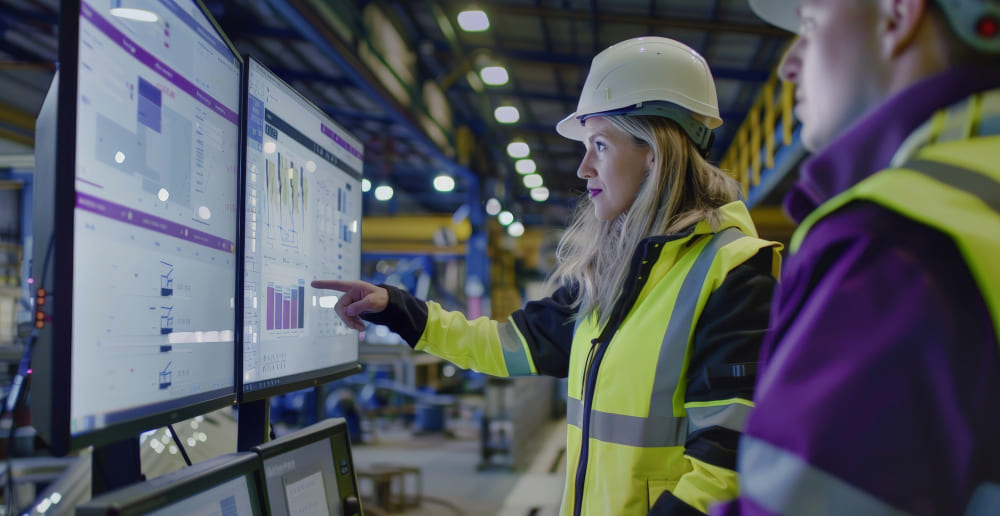
Despite the promise, success with data analytics in manufacturing remains uneven. Many firms collect vast amounts of information but fail to turn it into actionable intelligence.
1. Data Silos and Legacy Systems
Many manufacturers now still operate with decades old equipment and disjointed IT infrastructure. Integrating ERP, MES, and IoT systems is complex and costly. Consequently, managers lack real time visibility into the supply chain and shop floor performance, hindering agile decision-making.
2. The Talent Gap
Analytics talent is scarce. The 2024 World Manufacturing reports that 74% of manufacturers face difficulty hiring data scientists, analysts, and automation engineers. Without these roles, even advanced tools fail to deliver ROI.
3. Lack of Clear Strategy
Many organizations jump into analytics without defining measurable goals. The result? Data overload with limited outcomes. Successful companies start small, focusing on critical use cases like predictive maintenance or supply optimization before scaling.
4. Cultural Resistance
Adopting data driven decision-making challenges longstanding habits. Building a data culture requires leadership commitment, internal communication, and a mindset to shift from intuition to insight.
Overcoming these barriers demands alignment between technology investment, process redesign, and workforce transformation without sacrificing one for another.
The Human Side of Data: Building a Data-Driven Culture
Technology may generate insights but people give them meaning. The ultimate success of data analytics in manufacturing hinges on cultivating a data-driven culture one where curiosity, collaboration, and accountability thrive.
Executives are expected to champion transparency and encourage teams to experiment. Middle managers play a key role in bringing data insights into everyday decisions. And employees should feel equipped and confident when working with visual dashboards, trend reports, and predictive models.
The most advanced factories are not defined by automation levels, but by the adaptability of their people. Machines may optimize efficiency, but humans innovate and it is that synergy that defines the future of smart manufacturing.
The New Competitive Edge in Manufacturing
In the digital age, data is not a byproduct of manufacturing, it is the product. Data analytics in manufacturing redefines how companies design, produce, and deliver value. Those who master it will outpace competitors not just through efficiency but through intelligence.
Manufacturers that invest in data analytics today are shaping the industries of tomorrow where every machine is connected, every decision is informed, and every worker is empowered.
Because the real revolution in manufacturing isn’t about machines replacing humans it is about people harnessing data to unlock their full potential.
At Manpower Vietnam, our data-driven workforce solutions help manufacturers turn insights into optimizing operations, upskilling talent, and building smarter, more resilient factories.
Connect with our experts today to explore how data-driven workforce solutions can power your transformation.
.jpg)
.jpg)
.jpg)

.jpg)
.jpg)