- Define Technology Capability Required at Project Launch
- Choose the Workforce Route Before Calculating the Hiring Timeline
- Build a Technology Hiring Plan Backward From the Contribution Date
- Adjust Technology Hiring Lead Time for Complete Candidate Requirements
- Account for Readiness Time in Technology Hiring Lead Time
- Test the Chosen Workforce Route Against Project Timelines
- Combine Workforce Routes Where the Project Requires It
- Set the Latest Management Decision Date for Technology Hiring
- Conclusion
- FAQs
When deciding when to start technology hiring in Vietnam, employers should work backward from the date a capability must contribute to a project. The right timing depends on the capability required, the workforce route selected, and the time needed for that capability to become productive, rather than a fixed hiring lead time for every role.
A technology project is scheduled to start on October 1. The date has been agreed with clients, regional leaders or investors. The business now needs to decide when hiring should begin.
There is no single answer for the whole team.
A permanent engineering manager, a contract cloud specialist and a regional architect providing temporary support follow different paths before they can contribute. Their planning dates should reflect those paths.
Hiring outcomes also vary between employers. In Vietnam’s Q4 2026 survey, 40.4% of employers reported that vacancies were taking longer to fill than one year earlier, while 42.5% reported faster hiring. The results do not support one standard lead time for every company or requirement. They show why employers need a plan based on their own capability needs and workforce route.
Before calculating a date, the company needs clarity on technology hiring decisions before launch in Vietnam, including the team mandate, working model and decision authority.
- When to start technology hiring in Vietnam depends on the capability required, the workforce route selected, and the time needed for that capability to contribute.
- Hiring plans should be based on the capabilities needed at project launch, not simply the number of positions to be filled.
- Buy, Borrow, Bridge, and Build strategies involve different technology hiring lead times and should be evaluated before planning begins.
- Build a technology hiring plan by working backward from the target contribution date, factoring in hiring, onboarding, approvals, and potential delays.
- Strong IT workforce planning in Vietnam includes contingency options and review checkpoints to keep critical project milestones on track.
Define Technology Capability Required at Project Launch
A headcount target is not enough to calculate a hiring start date.
“Twenty employees required by October” does not explain which people must be ready to make decisions, start delivery or work with clients on that date.
The project plan should identify:
- technical decisions that need an owner;
- workstreams that must begin;
- client or regional relationships that need local support;
- production, architecture or security dependencies;
- capabilities required at project start;
- capabilities that can join during later phases.
This distinction changes the planning horizon.
A technical leader needed to set architecture before development begins must contribute earlier than someone joining after the backlog and engineering standards are established. A security specialist may be required before production approval, even if the wider team starts earlier.
The exercise also reveals how missing technology capability affects project milestones before an open position is recorded as a formal delay.
Choose the Workforce Route Before Calculating the Hiring Timeline
The route used to secure capability affects when planning must begin.
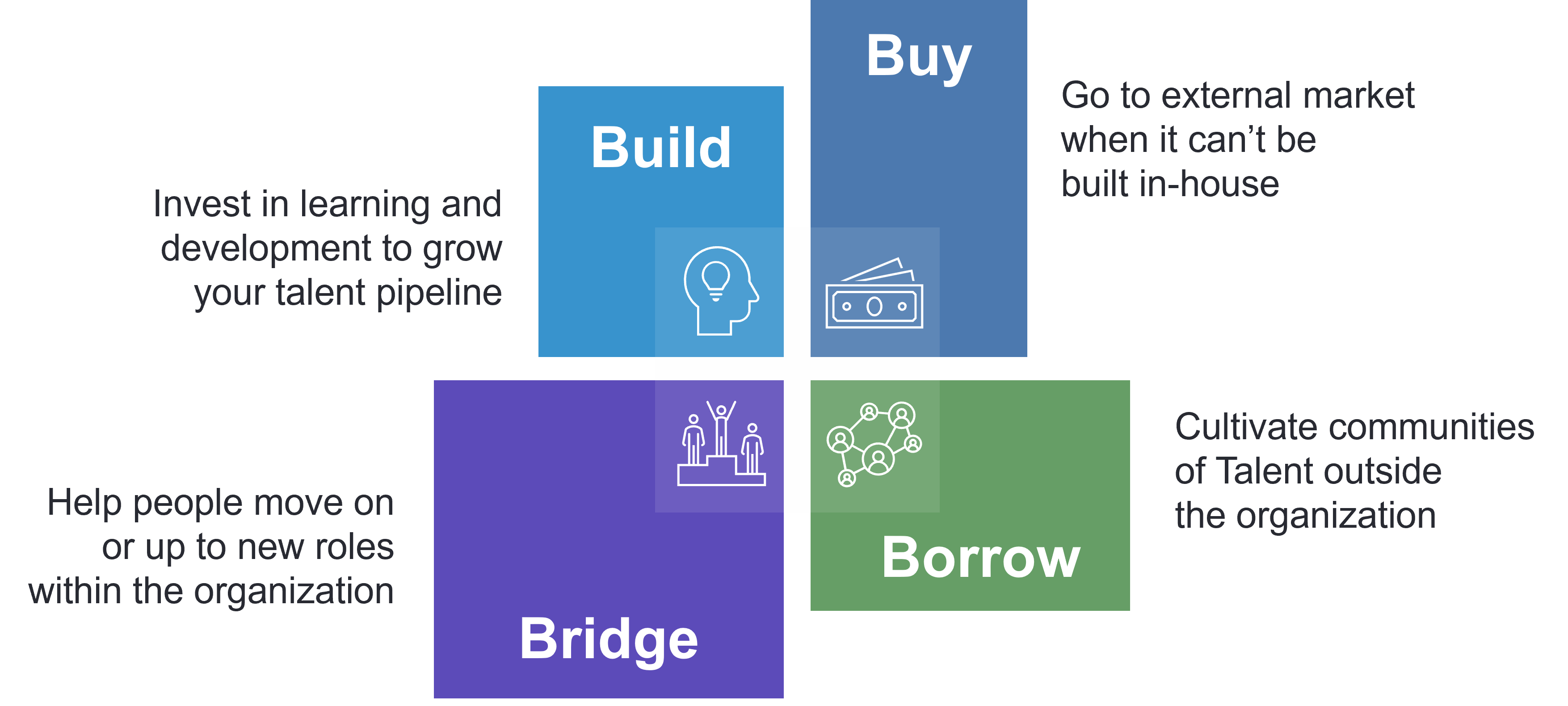
Buy
Permanent external hiring includes the time needed to reach suitable candidates, assess them, complete internal decisions, agree on a start date and prepare them to contribute.
Buy is relevant when the capability has lasting value and the company needs product, platform or operational knowledge to remain inside the organization.
Borrow
Contract or project-based professionals may provide capacity for a defined delivery period. The planning horizon still needs to include assignment design, candidate selection, employment or commercial setup, system access and team integration.
Borrow may create a shorter route in some situations. A narrow specialist search, complex access rules or unclear technical ownership can still require substantial preparation.
Bridge
A regional architect, global engineering manager or internal specialist may provide temporary coverage. Planning must include the person’s availability, approval from the current team, transfer of existing responsibilities and local project context.
Bridge can place capability into the project quickly, although the workload is transferred from another part of the business. The plan needs a review date and a named long-term owner.
Build
Existing employees may develop the capability through supervised project work, regional exposure or expanded responsibility. The planning horizon depends on the current skill level and the business’s ability to provide coaching and real work before the contribution date.
This limited use of building, buying, borrowing and bridging talent follows the wider ManpowerGroup workforce approach. The four routes help leadership compare possible paths without turning every capability gap into an external recruitment request.
Build a Technology Hiring Plan Backward From the Contribution Date
For each capability, start with the fixed date on which it must support the project.
Then count backward through:
- Time required after joining to access systems, understand the work and begin contributing
- Candidate joining or internal-transfer requirements
- The expected time required by the chosen workforce route
- Preparation needed before the search, assignment or development plan begins
- The most likely event that could force part of the plan to restart
The calculation can be expressed simply:
This is a planning method, not a fixed market benchmark.
For permanent external hiring, the route estimate should use a realistic technology hiring timeline in Vietnam based on the complete candidate profile and the employer’s decision process.
Adjust Technology Hiring Lead Time for Complete Candidate Requirements
Two roles with the same title can need different planning horizons.
A cloud engineer may require strong technical skills. Another cloud role may also require banking experience, spoken English, client communication, people management, frequent office attendance and a fixed salary range.
Experts at Manpower Vietnam observe that senior, lead and manager profiles become harder to reach when technical depth is combined with spoken English, stakeholder work and management responsibility. Security, cloud and embedded requirements may also involve narrower candidate groups.
Experienced candidates often assess project quality, technical ownership and leadership before entering or remaining in a hiring process. Long assessments, repeated interviews and slow feedback can increase the chance that the preferred candidate leaves the process.
Before assigning the planning date to the project schedule, employers should confirm technology hiring readiness assessment in Vietnam.
Account for Readiness Time in Technology Hiring Lead Time
Every workforce route has a readiness period.
- A permanent employee may need equipment, repository access, security approval, product context and technical onboarding.
- A contract professional needs a clear scope, access, decision rights and a person responsible for reviewing and accepting the work.
- A regional specialist providing temporary coverage needs local context, stakeholder introductions and clear authority.
- An employee following a development path needs supervised work, technical review and support while applying the new capability.
The project needs to account for this time. A person can be available and still need preparation before releasing a dependency or supporting delivery.
Test the Chosen Workforce Route Against Project Timelines
The business can now compare the planning horizon with the time left before the fixed project date.
If the route fits comfortably, the hiring plan can proceed with defined review points.
If the route fits with little margin, one candidate withdrawal, approval delay or access problem may place the contribution date at risk. Management should identify a supporting route and an escalation date.
If the route cannot create useful capability by the fixed date, the company should change the plan before recruitment begins. The options may include another workforce route, a narrower opening scope, a different delivery sequence, or a revised project date.
The immediate time calculation may point toward Borrow or Bridge. The longer-term structure should still be tested separately against whether permanent, contract or hybrid technology capacity fits the work.
Combine Workforce Routes Where the Project Requires It
One route does not have to cover the full capability need.
A company may Bridge architecture leadership from a regional team for project start, Buy a permanent local owner for later stages, Borrow specialist delivery capacity during implementation and Build selected capability within the local team.
Each route should record:
- the capability it covers;
- the date it must contribute;
- the accountable owner;
- the expected review or end point;
- the route that takes over afterward.
The same decisions should appear when building technology hiring around project milestones, so temporary coverage, permanent ownership and delivery needs remain connected.
Set the Latest Management Decision Date for Technology Hiring
Business leaders do not need to manage every recruitment step. They do need a date by which they will confirm whether the selected route can still support the fixed project start.
At that point, leadership should review:
- evidence from the candidate or internal talent market;
- status of critical capabilities;
- expected joining and readiness;
- main restart risk;
- available supporting route;
- any required change to scope, sequence or date.
This decision date is especially important when several capability requirements enter the market together and the organization is reviewing scaling a technology hiring pipeline in Vietnam.
Conclusion
A fixed project date does not create one hiring start date for the whole technology team.
The planning horizon depends on the capability required, the workforce route used to secure it and the time needed for that capability to become useful. Workforce route is part of the calculation from the start.
Employers whose selected route leaves little margin before the fixed project date can next review how Manpower Vietnam supports technology hiring projects with tight timelines, including how hiring priorities and critical dependencies are managed against delivery needs.
Starting technology hiring early allows organisations to assess talent needs, evaluate workforce options, and build realistic timelines around business and project requirements.
Explore Technology Recruitment Support in Vietnam