Healthcare and life sciences impact us all, from the nurse at a local clinic and medicine that heals a loved one, to the breakthrough treatments that save lives. In Vietnam, this sector is expanding rapidly, driven by rising healthcare demand, an aging population, and technological innovation.
But rapid growth brings complexity. Talent shortages, regulatory compliance, and digital transformation are reshaping the industry. At the centre of this evolution is artificial intelligence (AI), a force redefining everything from drug discovery to workforce planning.
AI: The Cornerstone of Future Health Systems
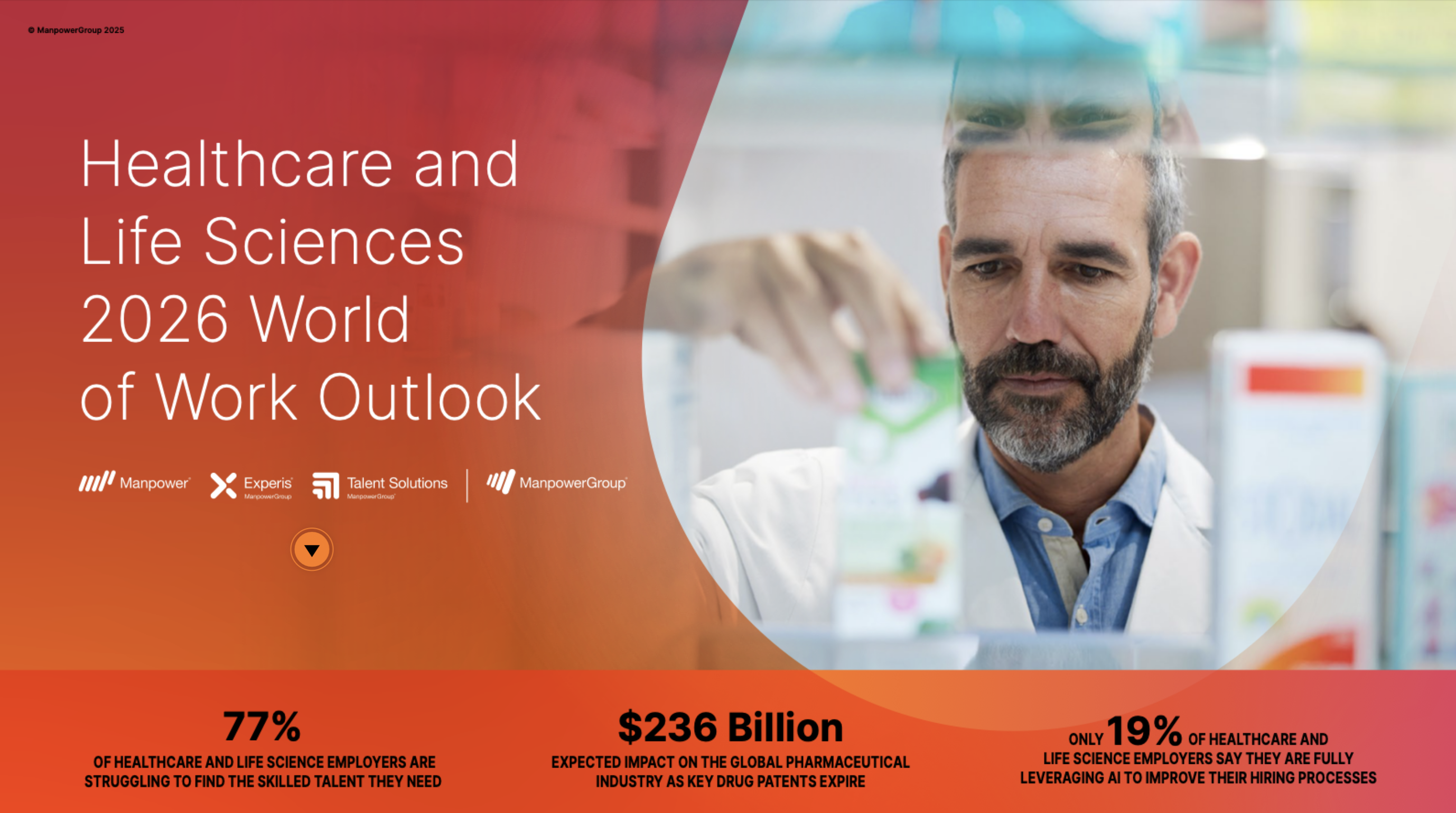
AI adoption in the healthcare and life sciences industry is accelerating. Hospitals are using AI for early diagnosis, predictive analytics, and real-time monitoring to improve patient outcomes. Pharmaceutical companies leverage AI to speed up R&D and reduce time-to-market for critical therapies. Yet, despite its promise, only 19% of employers said that they are fully utilize AI in hiring processes.
This gap between potential and reality is significant. Leaders see productivity potential with 96% of executives believing AI will boost productivity, but more than 77% workers still feel unclear or overwhelmed by AI.
This disconnect underscores a critical challenge: Technology alone cannot transform the industry. Organizations must prioritize workforce education, upskilling, and structured change management to fully unlock AI’s value.
The Patent Cliff and R&D Acceleration
The global pharmaceutical industry faces a $236 billion patent cliff in the period between 2025 and 2030 with numerous blockbuster drugs losing exclusivity. This drives an urgent need for innovation and renewed R&D investment, with over half of biopharma leaders acknowledging the need to overhaul their development strategies.
Innovations such as digital twins, predictive modelling, and AI-driven discovery are powering drug discovery. However, talent remains a bottleneck with 78% of employers in Asia-Pacific reporting difficulty finding the skilled talent they need in healthcare and life sciences sector in 2025.
Skills That Matter Most in an AI-Driven Era
As AI and machine learning become integral to healthcare and life sciences operations, demand is rising for professionals who combine clinical expertise with data fluency and use analytics to guide decisions. Hybrid roles blending data science, engineering or machine learning with medical or biological expertise will become increasingly pivotal to the innovation landscape.
Yet, while technical skills are critical, human skills still remain irreplaceable. Attributes such as ethical judgment, patient care, and communication are among the hardest to automate. This creates a dual imperative for employers: upskill for AI and digital fluency while simultaneously investing in interpersonal skills that enable more personalized care and elevate the patient experience.

Twin Factories and Global Workforce Landscape
To mitigate supply chain risks, pharmaceutical companies have been adopting “twin factory” models - establishing parallel manufacturing hubs in different regions. While this helps business cope with supply-chain disruptions and inflation, it also impacts the labour market. When a new facility is established, the ripple effect is substantial. Talented engineers, scientists, technicians, project managers, quality specialists seeking better job opportunities – along with their families - will be drawn to the region.
Meanwhile, cross-border talent solutions are gaining momentum. Many R&D and data science positions can now be performed from anywhere in the world, while manufacturing roles continue to depend on workforce anchored in local facilities. Simultaneously, workforce leaders are significantly increasing their focus on upskilling and reskilling to address the persistent talent gaps within the healthcare and life sciences sector.
Cost Pressures and Strategic Workforce Planning
Economic uncertainty and rising supply chain costs are prompting organizations to rethink hiring strategies. In Q4 2025, nearly half of global employers planned to keep headcount flat, while 13% anticipated reductions. Hiring is increasingly selective, focused on high-skill and frontline roles.
As global merger and acquisition (M&A) activity is expected to pick up especially in growth areas like oncology, biologics, and AI-driven therapeutics, strategic workforce planning becomes critical. Yet, nearly one-third of M&A failures stem from cultural clashes and talent loss. Therefore, HR leaders must prepare early: safeguard critical roles, enhance contingent workforce strategies, and support employees through transitions with structured career pathways.
A Human-Centered Tech Future for Healthcare & Life Sciences
Despite the extraordinary advances in AI, automation and digital manufacturing, one constant remains: people are the heart of healthcare and life sciences sector. Technology can elevate efficiency and innovation, but its success depends on how effectively organizations equip their workforce to embrace and lead change.
At Manpower Vietnam, we don’t simply watch these shifts, we help shape them. Our global Healthcare & Life Sciences vertical supports organizations to build resilient and future-ready workforces. We partner with clients to solve their most pressing workforce challenges across four core areas:
-
Talent Shortages & Skill Gaps: Skills-based hiring, upskilling, reskilling, and global talent sourcing
-
Technological Advancements: Digital transformation, AI enablement, and change management
-
Regulatory Compliance: Cost optimization, system monitoring, and proactive planning
-
Workforce Strategy: Career transition, total talent management, and strategic consulting
The future of healthcare and life sciences will be shaped by our ability to blend innovation with empathy, align automation with human insights, and turn strategy into meaningful action. Achieving this balance requires the right people in the right roles. Partner with Manpower Vietnam today to access healthcare specialized talent that turns vision into measurable results.
To find out more, download your complimentary copy of our 2026 Healthcare and Life Sciences World of Work Outlook.
Connect with our experts today and accelerate your journey toward building innovative and future-ready healthcare teams.