Healthcare and life sciences organizations are entering a defining period of transformation. Advances in artificial intelligence, precision medicine, biotechnology, advanced therapeutics, and digital healthcare are accelerating innovation across care delivery, research, and drug development. However, a growing shortage of skilled talent is making it harder for organizations to fully benefit from these technologies.
Today, 74% of healthcare and life sciences employers say they are struggling to find the skills they need. By 2030, the global healthcare workforce gap is projected to reach 11 million workers. At the same time, organizations must address employee burnout, persistent retention challenges, changing patient expectations, cybersecurity risks, and growing competition for specialized talent.
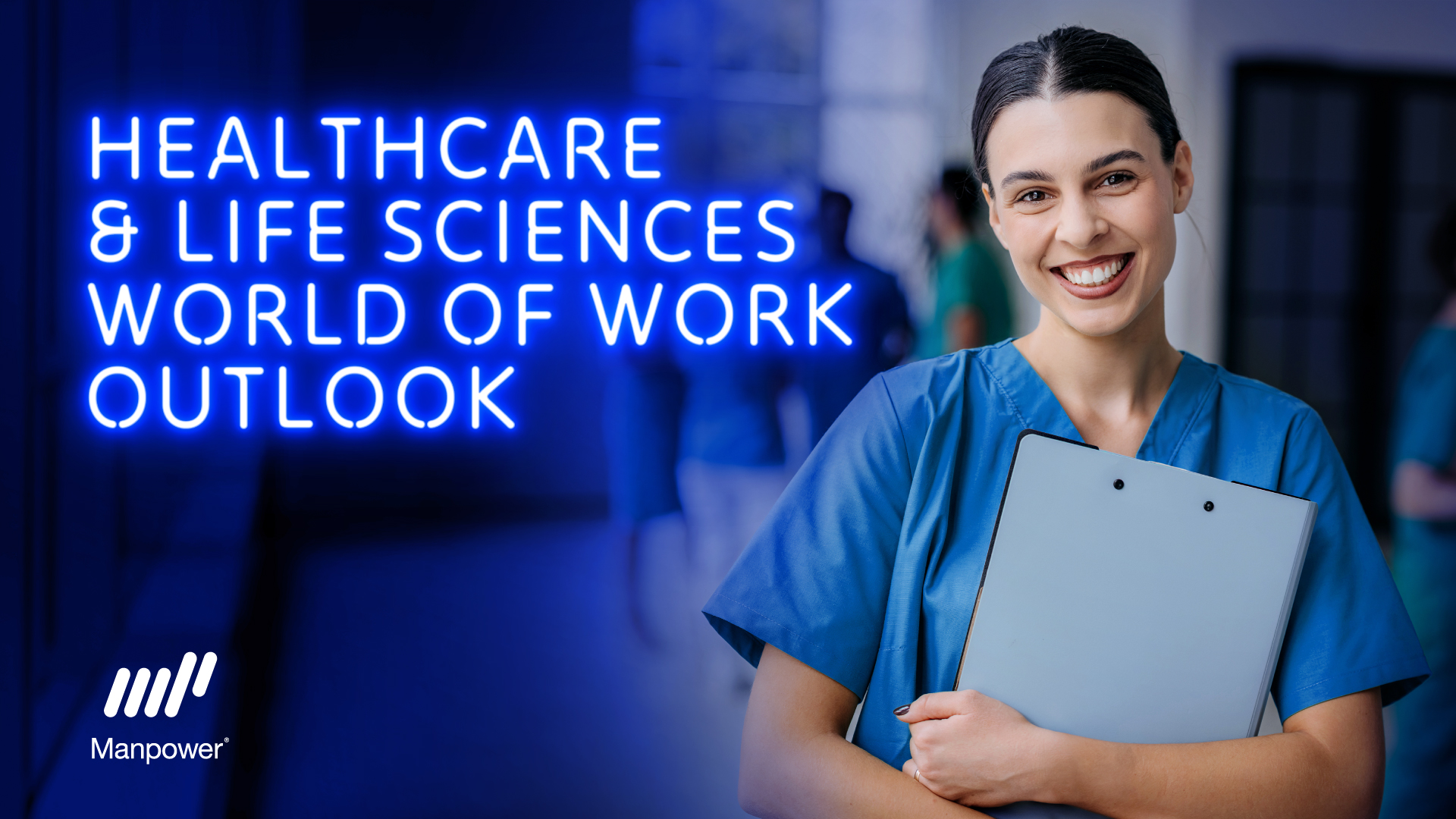
The Healthcare & Life Sciences World of Work Outlook 2026 examines the workforce trends transforming healthcare and life sciences worldwide. It provides insights into evolving talent shortages and skills needs, while highlighting how employers can attract, develop, and retain critical talent through skills-based hiring, strategic reskilling, workforce transformation, and human-centered leadership. Alt text: Prepare for future talent needs in Healthcare and Life Sciences.

What Is Transforming The Healthcare and Life Sciences Workforce?
1. The AI Prognosis
AI is becoming part of daily clinical, operational, and research workflows, with 47% of health sector CIOs already seeing positive returns. However, most healthcare and life sciences employers report no improvement in time-to-hire.
2. Strong Vitals
Healthcare and life sciences organizations remain confident about their growth prospects despite wider economic uncertainty, with over 75% of biopharma and medtech executives optimistic about their organizations’ financial outlook.
3. Patent Cliffs Fuel Transformation Urgency
Patent expirations are increasing pressure on pharmaceutical and biotech companies to replace revenue, control costs, and accelerate drug development. The global pharmaceutical patent cliff is expected to peak at US$104 billion in 2027.
4. Health Comes Home
Demand for more convenient, personalized care is driving the shift toward home-based healthcare, with the market projected to reach US$473.8 billion by 2030.
5. Biomanufacturing Bottlenecks
Drug shortages and geopolitical volatility are reshaping pharmaceutical supply chains, with 56% of biopharma executives anticipating a dramatic increase in domestic biologics manufacturing over the next three years.
6. Growing Cyber Security Threats
Cybersecurity is a growing concern for healthcare organizations, with 83% of health sector CIOs identifying it as the greatest threat to their business.
7. Chronic Talent Scarcity
Across every transformation, success depends on having the right people and skills. Yet 74% of healthcare and life sciences employers struggle to find the skilled talent they need.
Healthcare and life sciences are transforming rapidly, reshaping the talent and skills organizations need to succeed. Explore the trends, anticipate workforce challenges, and build a more resilient, future-ready workforce.