
The Changing Landscape of the Automotive & Mobility Industry
The automotive industry is entering a new era. From electric vehicles (EVs) and autonomous cars to mobility-as-a-service (MaaS) platforms, every aspect of how people move is being reimagined. But with transformation at this scale comes a critical question: Who will power this change?
Talent is now the true engine of innovation. Companies that can attract, develop, and retain the right people will not just survive they will lead. As the industry evolves, automotive & mobility staffing has become a strategic priority for companies worldwide, enabling them to balance technological disruption with sustainable growth.
This article explores the global trends in automotive & mobility staffing, highlighting essential skills, key challenges, and emerging opportunities.
The Global trendsredefining Automotive & Mobility Staffing
The global demand for automotive talent is evolving alongside major technological and social shifts.
1. The EV Revolution
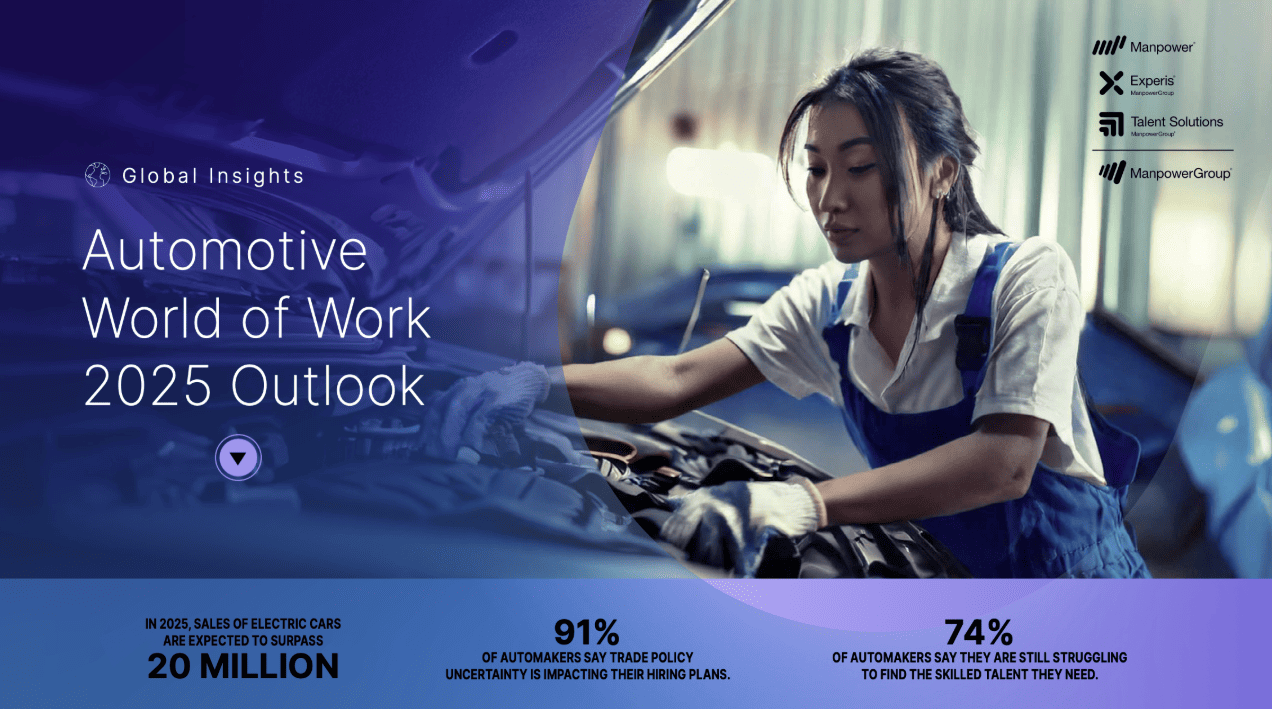
Electric vehicles are no longer niche. Global electric car salesare expected to reach 20 million units in 2025.While sales volumes may be impacted by economic and policy uncertainties, this surge fuels demand for battery engineers, power-electronics specialists, and vehicle-software developers. Automakers must secure talent fast enough to match this rapid growth.
2. Autonomous & Connected Vehicles
Self-driving cars depend on advanced technologies like AI, data science, and cybersecurity and about 44% of workforce skills will need to change in the coming years.For mobility companies worldwide, recruitingand upskilling engineers in these critical fields has become a top priority.
3. Sustainability & Green Manufacturing
Leading automobile manufacturers are setting ambitious goals to lead the way: Ford targets global carbon neutrality by 2050, focusing on electric vehicles and renewable energy, while General Motors plan to source 100% renewable energy by 2025This trend make one thing clear: green skills are no longer optional - they are essential for the future of mobility.Currently, 73% of automotive employers are hiring or planning to hire for green roles and skills.This shift is driving companies to rethink their operations and invest heavily in sustainable technologies and practices.
4. Mobility-as-a-Service (MaaS)
As mentioned in ManpowerGroup’s 2024 Automotive World of Work Report, the growth of Mobility as a Service (MaaS) and shared vehicle ownership is driving an urgent demand for fleet maintenance and customer service talent to ensure maximum uptime and real-time service quality.Early investment in workforce strategy will provide organizations with a sustainable competitive advantage not only in production efficiency, but also in their ability to deliver seamless, technology-driven user experiences.The automotive industry’s profound transformation powered by electrification, green manufacturing, Mobility as a Service, and digital integration is redefining products, processes, and the skills needed to sustain growth. Organizations are now compelled to rethink their workforce strategies to attract and develop talent aligned with new priorities.
Essential Skills Shaping the Future Workforce

As technology evolves, skills determine survival. What competencies will define the next generation of mobility talent?
-
Technical & Digital Expertise:In automotive industry, AI, IoT, automation, and vehicle connectivity are core capabilities driving smarter production and connected mobility solutions.
-
Data Analytics & Software: Data engineers and software developers optimize vehicle performance and customer journeys.
-
Green Competencies: Skills in renewable energy integration and sustainable manufacturing are essential for low-carbon production.
-
Soft Skills: Adaptability, collaboration, and creative thinking remain critical as teams navigate constant change.
Key Challenges in Automotive & Mobility Staffing
Despite the opportunities, companies face significant hurdles. If every organization is competing for the same talent pool, how can you stand out?
-
Talent shortage: 75% of employers in the APAC’sTransport, Logistics & Automotive industryare struggling to find skilled workers in 2025, highlighting the ongoing severity of the talent shortage.
-
Fierce competitionacross industries:Every industry is racing toward digital transformation and sustainable development. Thus, automakers now compete with tech firms or logistics enterprises for AI and data talent.
-
Regional skill gaps: Emerging markets struggle to match the digital and technical capabilities of developed regions. This pose a challenge for global automotive players to implement advanced mobility solutions at scale.
-
Retention and Engagement: Retainingtoday’s top engineers requires more than salary. It demands purpose, growth, and continuous learning.Yet not all employers acknowledge these emerging needs from workers.
Addressing these issues is crucial for effective strategies for automotive & mobility staffing in a hyper-competitive market.
Building a Future-Ready Workforce: From Strategy to Action
Preparing for the future of automotive and mobility requires more than reactive hiring demands a holistic workforce strategy, it demands a holistic workforce strategy. Organizations must anticipate skills gaps, adopt flexible staffing models, and deliver real value to employees. This means:
1. Skill Forecasting & Corporate Learning
Proactively address talent shortages by anticipating future skill gaps and developing their workforce. Leading automakers are establishing in-house learning academies focused on AI, data analytics, and green manufacturing, enabling them to cultivate emerging skills internally when ready talent is scarce in the market.
2. Flexible Workforce Models
Adopting hybrid staffing combining full-time, part-time, and contingent workers allows organizations to quickly fill skill gaps while optimizing costs. In the automotive sector, Manpower Vietnam’s staffing solutions help deploy the right mix of permanent, temporary, and project-based talent, ensuring teams are agile, capable, and ready for a fast-changing environment.
3. Delivering Value to Employees
Building a future‑ready workforce goes beyond upskilling it means offering employees what they truly seek: purpose, growth, and flexibility. By understanding these expectations, organizations can not only attract and retain talent but also turn strategy into action, creating a workforce that is engaged, adaptable, and future-ready.

The speed and complexity of this transformation mean organizations cannot afford to navigate the talent landscape alone. The automotive industry is no longer defined by engines and assembly lines, it’s powered by data, AI, and people.
But the future workforce will not build itself. You need a strategic ally who understands this journey and can turn vision into measurable action.At Manpower Vietnam, we go beyond filling roles, we support you to proactively secure and develop theright talent to lead the industry's digital and technological shift.